Premier League Darts Betting Tips: Weekly Knockout Format Strategies
 Available in US
Why Premier League Darts Is the Best Weekly Betting Event in the Sport
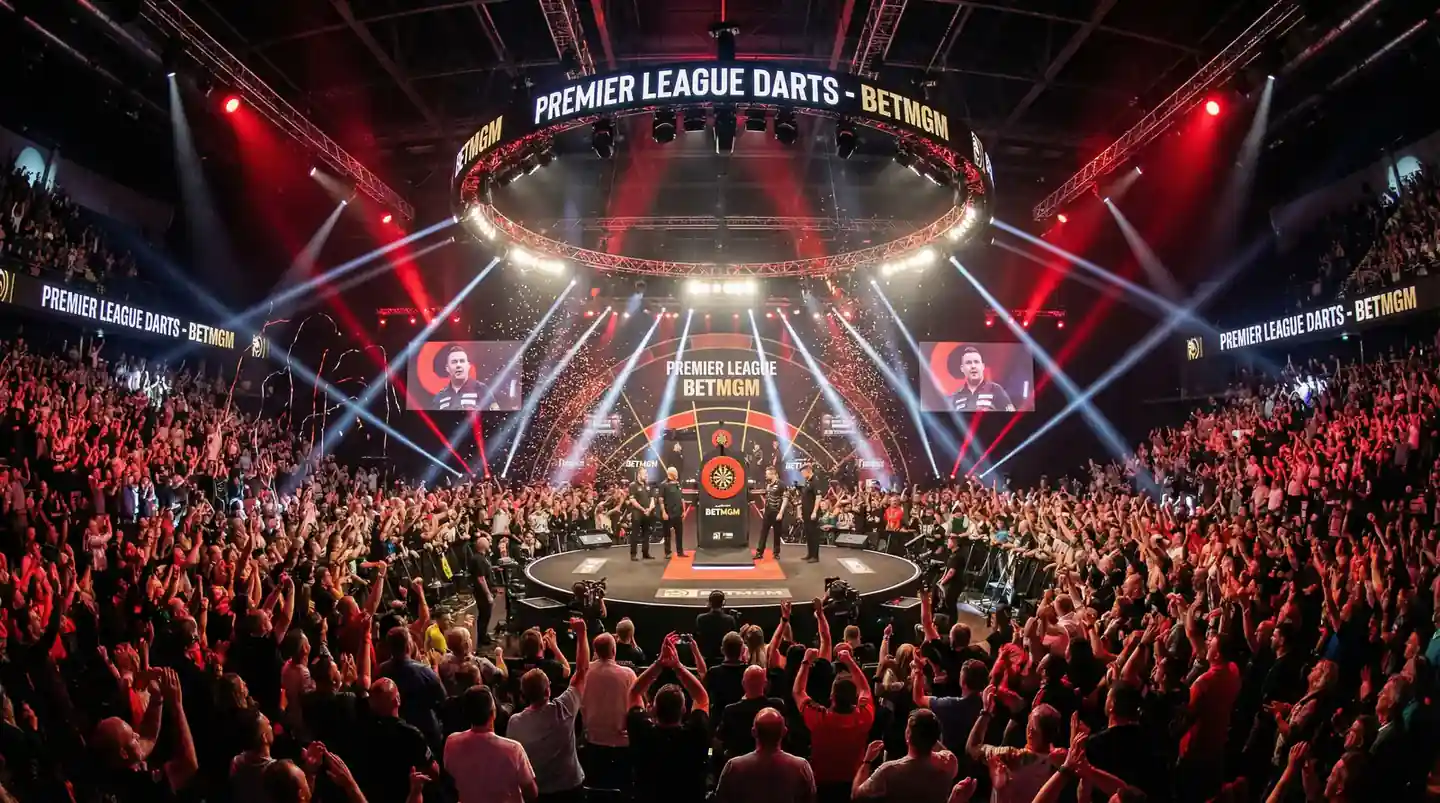
Thursday nights from February through May are the highlight of my darts betting calendar. The Premier League runs every week, same format, same eight players, rotating venues across the UK and Europe — and it generates a predictable rhythm of betting opportunities that no other darts event matches. With a prize fund of 1.25 million pounds and 350,000 going to the winner, the stakes are high enough to guarantee maximum effort from every player on every night.
What makes the Premier League uniquely attractive for bettors is the sample size it produces. Over a 16-week season, you see the same players facing each other repeatedly in near-identical formats. That repetition lets you build genuinely predictive models — unlike one-off tournament matches where you’re extrapolating from less data. By week four or five, you’ve already got a season-specific picture of each player’s form trajectory, their response to different venues, and their head-to-head patterns within this particular competition. I’ve found that my hit rate on Premier League bets in the second half of the season is measurably higher than in the opening weeks, purely because the data density reaches a tipping point.
Knockout Format: What It Means for Your Bets
The Premier League switched to a weekly knockout format in recent seasons, and that change has significant implications for how you should bet. Instead of the old round-robin league phase where every match was played to a result but the consequence of any single loss was diluted across weeks, the knockout format makes every Thursday a self-contained mini-tournament. Four quarter-finals, two semi-finals, and a final — all in one evening.
The knockout structure increases variance in two ways. First, the match lengths are shorter than in many major PDC events, which gives underdogs a better chance of springing surprises. A best-of-11 legs match is long enough for quality to matter but short enough for a hot streak to decide the outcome. Second, the accumulation of fatigue across an evening matters. A player who wins a gruelling quarter-final that goes to a deciding leg faces a semi-final opponent who cruised through in seven legs. That energy differential is real, and sportsbooks underestimate it because they price each match independently without fully accounting for what happened in the previous round.
I track “path to final” difficulty as a variable in my Premier League model. On nights where the bracket produces one tough half and one easy half, the player emerging from the easy half has a measurable advantage in the final that the pre-night outright price doesn’t always reflect. It’s a small edge, but the Premier League gives you sixteen opportunities per season to exploit it.
Travelling Circus: Does Venue Location Affect Outcomes?
The Premier League visits a different city every week — Belfast, Glasgow, Liverpool, Rotterdam, Berlin, Dublin — and I spent two seasons tracking whether venue location measurably influenced results. Sky Sports logged 51.2 million viewer hours on the World Championship alone in 2025/26, and Premier League nights draw substantial live audiences that vary dramatically in character from city to city.
What I found was subtler than a simple home-crowd advantage. There’s no “home” player in the Premier League since the participants don’t represent cities. But venue character does matter. Certain cities produce louder, more aggressive crowds that favour power scorers — players whose games feed off the energy of 180 chants and walk-on theatrics. Quieter, more technical venues tend to produce closer matches because the atmosphere doesn’t amplify the frontrunner’s momentum as aggressively.
Rotterdam and Berlin are the two venues I’ve noted as consistent outliers. The continental European crowds bring a different energy — more partisan toward specific players, often louder during doubles attempts, and less predictable in their reactions. I’ve seen favourites thrown off their rhythm by unfamiliar crowd patterns in these venues more often than at UK dates, which suggests a small but consistent underdog edge at continental legs of the tour. It’s not enough to base a strategy around, but it’s a factor I add to my assessments on those specific weeks.
The Dublin night, when it’s on the schedule, draws a distinctly enthusiastic Irish crowd that’s knowledgeable about the sport and vocal in their support. For Irish bettors, that home-city familiarity with the crowd dynamics offers an observational advantage — you understand the environment better than the sportsbook’s model does.
Using League Table Position to Spot Motivation Edges
By the midpoint of the Premier League season, the table tells a story about who’s motivated and who’s going through the motions. The knockout format awards league points for progress on each night, and the top four at the end qualify for the playoffs. A player sitting comfortably in the top two with six weeks to go has less incentive to peak on a random Thursday than a player fighting for the fourth playoff spot with two weeks remaining.
I’ve noticed this pattern repeatedly: players on the playoff bubble in weeks 12-16 perform above their season average, while players who’ve already secured qualification sometimes drift. The drift isn’t dramatic — these are professionals competing for significant prize money every night — but it’s enough to shift match probabilities by two to three percentage points. When a player battling for fourth place is priced as an underdog against a player already locked into second, that price often underestimates the motivation differential.
The reverse also applies. In the early weeks, when every player is fresh and the table is blank, there’s a brief window where established stars sometimes underperform expectations. They’re pacing themselves for a long season, getting comfortable with the new year’s form, and treating the first few nights as calibration. Meanwhile, a player making their Premier League debut or returning after a year’s absence comes in with maximum intensity. That early-season motivation gap has produced some of the biggest upsets in Premier League history, and it recurs often enough that I always factor it into my first four weeks of betting.
The Premier League’s weekly rhythm means you don’t need to be right every Thursday — you need a process that identifies the two or three nights per season where your edge is largest and scales your stakes accordingly. Flat staking across every night is a common mistake; the smart approach is to bet selectively and heavier when table dynamics, venue factors, and form convergence all point the same direction.
How does the Premier League Darts knockout format change betting compared to a round-robin?
The knockout format compresses each Thursday into a mini-tournament with quarter-finals, semi-finals, and a final. This increases variance compared to the old round-robin because shorter-format matches favour underdogs, and fatigue from early rounds affects later-round performance. It also creates path-dependent value — a player who had an easy quarter-final has a real advantage in the semi-final.
Do crowd atmospheres at different venues measurably affect darts results?
Venue effects are subtle but real. Continental European stops like Rotterdam and Berlin produce less predictable crowd dynamics that can disrupt favourites accustomed to UK atmospheres. Louder venues favour power scorers who feed off crowd energy, while quieter venues tend to produce closer, more technical contests. The effect is small enough that it should adjust your analysis rather than drive it.
Find the best options for darts betting.
Read our detailed review of Responsible Gambling for Darts Bettors in Ireland: Tools, Limits and Support.
Prepared by the Darts Betting editorial staff.