Darts Break of Throw Market: Betting on Who Loses Their Throw
 Available in US
A Tennis Concept on the Darts Board
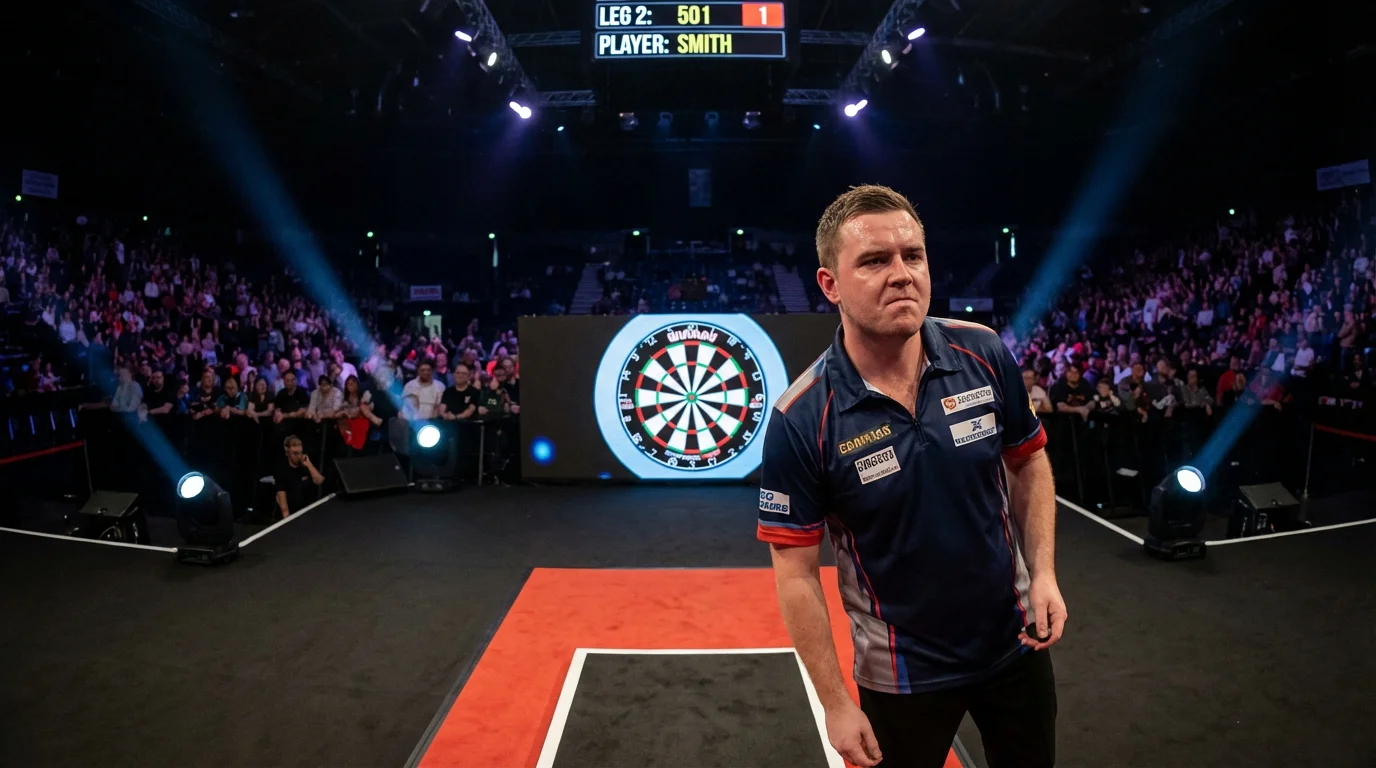
The first time someone explained the break of throw concept in darts to me, they used a tennis analogy, and it clicked instantly. In tennis, the server has a built-in advantage and is expected to win their service game. When the returner wins instead, it’s a “break of serve” — a significant momentum shift. Darts works the same way. The player who throws first in each leg has a structural advantage because they get the first visit to the board and can apply pressure before their opponent has even stepped up. When the non-thrower wins the leg, that’s a break of throw — and there’s now a betting market built around it.
The break of throw market is one of the newer additions to darts betting, and it’s still thin enough at most sportsbooks that pricing inefficiencies are common. It’s a market that rewards understanding of the game’s underlying mechanics rather than just following form tables, and for bettors who invest the time, it offers angles that the standard match winner and handicap markets can’t provide.
How Throw Advantage Works in Professional Darts
The player who throws first in a leg visits the board first, which means they’re always at least three darts ahead in the scoring sequence. If both players score identically on every visit, the first thrower will reach a checkout score before their opponent and get first crack at the double. That structural lead — three darts of separation — translates into a measurable advantage that holds across all levels of professional darts.
At PDC tour level, the player throwing first wins the leg approximately 55-62% of the time, depending on the quality of the players involved. For elite players averaging above 100, throw advantage is slightly less pronounced because both players reach checkout scores quickly and the finishing skill becomes the equaliser. Luke Littler, averaging 105-115 in major matches, is so efficient that his throw advantage is compressed — he finishes legs so fast that even when throwing second, he often reaches the double before his opponent has had a realistic attempt. But for the broader professional field, the 55-62% range holds consistently.
The alternation pattern matters too. The player who throws first in leg one throws second in leg two, first again in leg three, and so on. This alternation means that in an odd-numbered best-of format, one player will always have more legs throwing first than their opponent. In a best-of-11, the player who wins the bull throw — a pre-match coin flip equivalent — gets first throw in six legs versus their opponent’s five. That one extra leg of throw advantage is small but measurable, and the match winner odds already embed it. The break of throw market, however, requires understanding it at a finer grain.
How Often Do Breaks of Throw Happen at PDC Level?
I’ve been tracking break of throw frequency across televised PDC matches since 2020, and the numbers are remarkably stable. In an average PDC televised match, roughly 35-40% of legs result in a break of throw. That’s higher than most bettors expect, and significantly higher than the equivalent figure in tennis (where break of serve rates at elite level run around 20-25%).
The reason breaks are more common in darts than in tennis is that the throw advantage is smaller in absolute terms. In tennis, the server controls the point’s initiation with speed and placement that the returner must react to. In darts, the first thrower has a three-dart head start but no ability to disrupt their opponent’s scoring. Both players throw at the same static board, so the non-thrower’s scoring is completely independent of what the thrower does. The advantage is purely sequential, not interactive.
Littler’s dominance, demonstrated by his consecutive World Championship titles, has an interesting effect on break statistics when he plays. Against lower-ranked opponents, his break rate when throwing second is exceptionally high — above 50% in some stretches — because his scoring power is sufficient to overcome the three-dart deficit on most visits. Against fellow top-five players, his break rate drops to the 35-40% range because the sequence advantage becomes harder to override when both players are averaging above 100.
The consistency of these numbers across seasons tells me that break of throw is a structural feature of darts, not a volatile stat. That structural stability makes it a better foundation for betting models than many match-specific metrics that fluctuate wildly from event to event.
Where to Find Value in Break of Throw Markets
The break of throw market typically offers two types of bet: will there be a break of throw in the match (yes/no), and total breaks of throw over/under a specified line. The first is almost always “yes” at short odds — given the 35-40% per-leg break rate, the probability of at least one break in a match of seven or more legs approaches certainty. The over/under total is where the interesting action sits.
My approach to finding value in break totals starts with each player’s hold rate — the percentage of legs they win when throwing first. A player with an 65% hold rate is less likely to be broken per leg than one with a 55% hold rate, and when two high-hold players meet, the total breaks in the match will trend toward the under. Conversely, when two players with low hold rates meet, breaks accumulate faster, and the over becomes attractive.
The mispricing I exploit most often is in matches between a heavy scorer with average finishing and a moderate scorer with excellent finishing. The heavy scorer’s throw advantage is partly based on reaching the checkout first, but if they can’t convert their doubles, they hand the leg back to an opponent who converts at a high rate. This matchup profile produces more breaks than the sportsbook’s model predicts, because the model typically weights scoring average more heavily than finishing differential. When I see a player averaging 100 with a 36% checkout rate facing a player averaging 93 with a 44% checkout rate, I immediately check the breaks over/under line.
One more nuance: break of throw patterns are not evenly distributed across a match. Breaks cluster in the first two legs and the last two legs. Early in the match, both players are still settling into their rhythm, and the throw advantage is least reliable. Late in the match, pressure mounts on the player who’s behind, and desperate chasing produces errors that lead to breaks. The middle legs of a match are where holds are most reliable. This clustering pattern means that short-format matches, which are dominated proportionally by early and late legs, produce relatively more breaks per leg than long-format matches — a detail worth incorporating into your model when the line is set.
What percentage of legs are held on throw in elite PDC matches?
At elite PDC level, the player throwing first wins the leg approximately 55-62% of the time. This means roughly 38-45% of legs result in breaks of throw. The hold rate is slightly higher for the very best players — those averaging above 103 — and lower for mid-ranked professionals in the 93-98 average range.
How does the break of throw market differ between legs and sets formats?
In legs-only formats, break of throw applies to each individual leg. In sets formats, breaks can be measured at both the leg level within a set and the set level across the match. Most sportsbooks offer break of throw markets at the leg level regardless of format. The sets format adds a wrinkle because winning a set by breaking in a decisive fifth leg carries outsized importance.
Discover everything about darts betting here.
Check out our guide on Darts Exchange Betting: How Back-and-Lay Markets Work as well.
Prepared by the Darts Betting editorial staff.