World Grand Prix Darts Betting: How the Double-Start Format Creates Unique Value
 Available in US
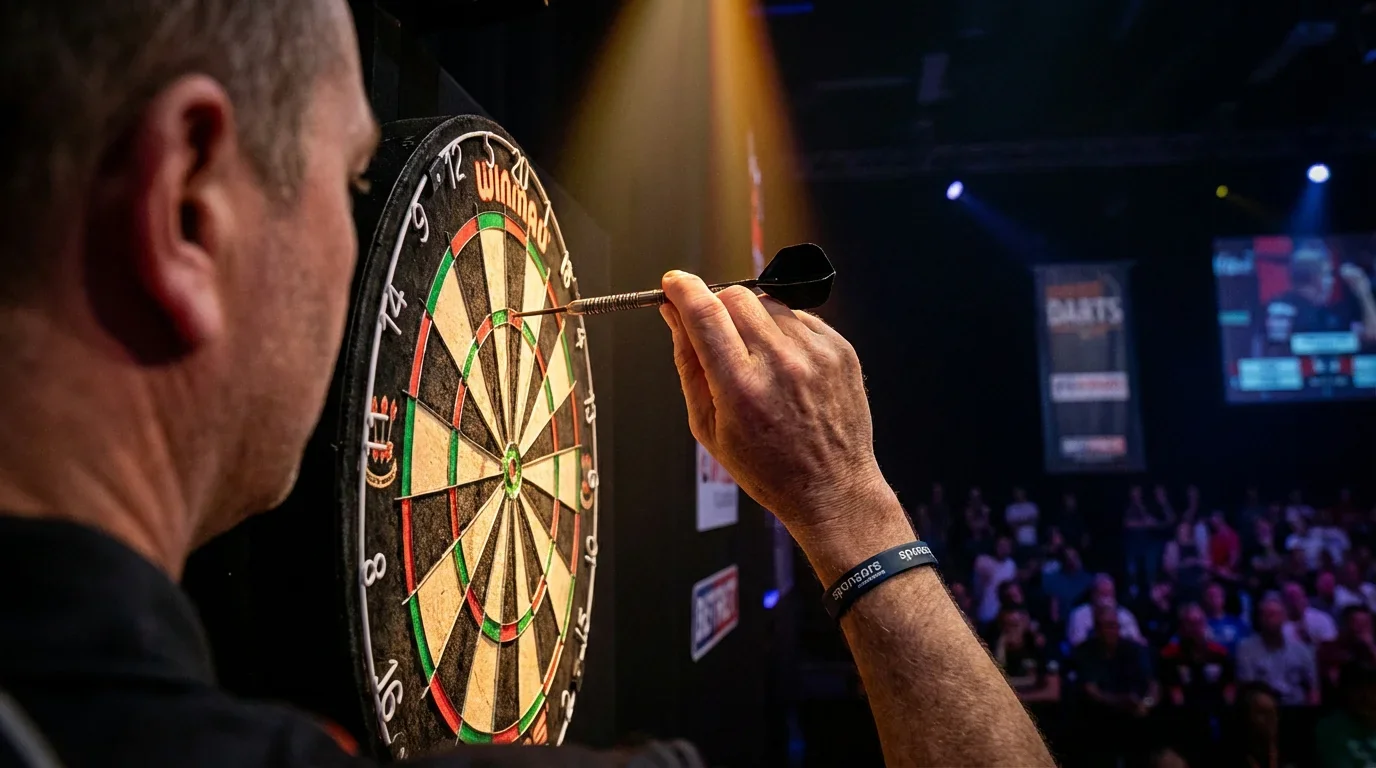
One Rule Change That Turns Darts Betting Upside Down
I’ve watched some of the best darts players on the planet stand at the oche, stare at double 16, and look like they’ve never thrown a dart before. That’s what the World Grand Prix does to people. One rule change — requiring players to hit a double to start scoring as well as to finish — transforms the entire competitive dynamic and, with it, the entire betting landscape. The PDC’s total prize fund exceeded 25 million pounds in 2026, reflecting the sport’s extraordinary growth, and the Grand Prix sits as one of the most distinctive events in that expanded calendar precisely because it plays by different rules.
For bettors, the double-start format is a gift. It creates pricing inefficiencies that other PDC events simply don’t produce, because the sportsbook models that price World Matchplay or UK Open matches need fundamental recalibration for a format where the ability to hit a double on your first visit determines whether you score at all. Most models handle this imperfectly, and the result is mispriced matches that reward specialists who understand the format’s unique dynamics.
Double-Start Scoring: What It Is and Why It Matters
In standard 501, a player begins scoring immediately — their first three darts count from the moment they step to the board. At the Grand Prix, nothing counts until a double is hit. A player could throw 180 with their first three darts and score zero because they haven’t started yet. Once they hit a double, they begin scoring from whatever the double is worth, then proceed as normal. The leg finishes the usual way, on a double out.
This changes everything about leg dynamics. In standard darts, the player who throws first has a significant advantage because they get first crack at the board and can build a lead that forces their opponent to chase. At the Grand Prix, the throw advantage diminishes because both players might spend their first visit — or their first two visits — just trying to hit a starting double. I’ve seen legs where the player throwing first didn’t start until their second visit, while their opponent nailed double 16 immediately. The starting advantage vanished in a single dart.
The format also adds a layer of attrition that standard darts doesn’t have. Players who struggle with doubles face a double penalty: they’re slow to start legs, which puts them under scoreline pressure, and they’re unreliable at finishing legs, which means they can’t capitalise even when they catch up on scoring. A player whose doubles conversion rate drops by 10% sees the impact doubled at the Grand Prix compared to a standard event, because the same weakness costs them at both ends of every leg.
How Double-In Reshapes Odds and Upsets
The Grand Prix produces more upsets per round than any other major PDC event, and the double-start format is the primary reason. Luke Littler’s back-to-back World Championship wins in 2025 and 2026 confirmed his status as the sport’s dominant force, but even elite players can have cold spells at the doubles ring. When that cold spell hits at the Grand Prix, the consequences are immediate and compounding.
My tracking of Grand Prix results over the past seven editions shows that players seeded in the top eight lose in the first round at roughly twice the rate they do at other PDC majors. The specific failure mode is consistent: a top seed who hits starting doubles at a rate below 50% in a best-of-three sets match doesn’t have enough legs to recover from the scoring deficit that slow starts create. A lower-ranked opponent who happens to start well on the night can build leads that would be impossible to establish in standard scoring.
This creates a clear betting angle. When the Grand Prix draw is released, I immediately identify top seeds whose recent doubles conversion rates are below their season average. Even a player averaging 40% on doubles for the season might have dipped to 32% over their last five events. At the Grand Prix, that dip translates into significantly reduced competitiveness, and their first-round price often doesn’t reflect the format-specific risk. Backing their opponent, or taking the underdog on a handicap, has been one of the more reliable patterns in my annual betting strategy.
Betting Angles Specific to the Grand Prix
Beyond first-round upset hunting, the Grand Prix format opens several angles that don’t exist at other events.
The first is total legs over/under in individual matches. Because double-start delays scoring and occasionally wastes entire visits, legs take longer to complete and the number of legs per set tends to be higher. A best-of-five legs set in standard scoring might produce three or four legs (a 3-0 or 3-1 result). At the Grand Prix, 3-2 sets are significantly more common because slow starts equalise the quality gap and give the weaker player more chances to steal legs. If you’re betting over/under on total legs in a Grand Prix match, the over has structural support.
The second angle is checkout-related markets. The Grand Prix’s emphasis on doubles means that the highest checkout prop and checkout-related player markets become more volatile and more interesting. Players who favour unusual starting doubles — double 20 or double 16 rather than the more conventional choices — often get into scoring faster and create opportunities for higher checkouts because their leg path is less disrupted. Tracking which players have the most efficient starting double routines gives you an informational edge in these markets.
The third is the each-way outright market. Because the Grand Prix produces more upsets than other majors, the outright market carries more variance, and each-way betting at generous place terms can protect you when an outsider runs deep but falls short. A player priced at 25.00 outright who reaches the semi-finals pays handsomely on the place part of an each-way bet, and the Grand Prix’s format makes those deep runs from outsiders more common than the baseline odds suggest.
The Grand Prix is a format purist’s paradise. It rewards a specific set of skills, punishes specific weaknesses disproportionately, and produces market inefficiencies that the standard PDC pricing model handles imperfectly. If you only bet one niche darts market all year, this is the event where format knowledge converts most directly into edge.
Which players historically perform best in the double-start format?
Players with consistently high doubles conversion rates — above 42% on the season — tend to perform best at the Grand Prix because the format amplifies the advantage of hitting doubles reliably. Look for players who start legs quickly and finish efficiently, as both skills are tested simultaneously in the double-start format.
Why do more upsets happen at the World Grand Prix than at other PDC majors?
The double-start requirement reduces the throw advantage and introduces more randomness into leg outcomes. Top seeds who struggle to hit starting doubles lose the scoring head start that normally protects them, while lower-ranked opponents who happen to start well can build leads that are difficult to overturn in a short sets format.
Find the best options for darts betting.
Read our detailed review of Cookie Policy.
Published by the Darts Betting team.