PDC Darts Growth in 2026: How the Boom Changes the Betting Landscape
 Available in US

A Sport in Hypergrowth — and What That Means for Bettors
I’ve covered darts betting for eleven years, and the sport I started analysing bears almost no resemblance to what it’s become. The PDC’s total prize fund exceeded 25 million pounds in 2026 — a historic increase of 7 million compared to the previous year. Sky Sports logged 51.2 million viewer hours on the World Championship alone, more than double the figure from four years earlier. Ticket sales, broadcast deals, sponsorships, and betting volume have all surged simultaneously, creating a feedback loop of growth that shows no sign of slowing.
For bettors, growth isn’t just a feel-good story about the sport we love. It’s a structural shift that changes how markets are priced, how much liquidity they carry, and where value hides. Understanding the mechanics of that shift is the difference between riding the wave and being swept under it.
Prize Money Explosion: 25 Million Pounds and Counting
The doubling of the World Championship prize fund — from 2.5 million pounds, where it had plateaued since 2019, to 5 million in 2026 with one million for the winner — is the most visible marker of the boom. But it’s not the only one. Prize money has increased across the entire PDC circuit, with the Premier League carrying 1.25 million, the European Tour expanding, and floor event prize pools growing alongside.
Steve Brown, chairman of the Junior Darts Corporation, captured the grassroots impact: since Littler’s arrival on the world stage, the academies have exploded, and most now run waiting lists. That pipeline of young talent, inspired by the financial rewards at the top, will deepen the competitive field in the years ahead — and a deeper field changes betting dynamics by producing more competitive matches across more rounds of more tournaments.
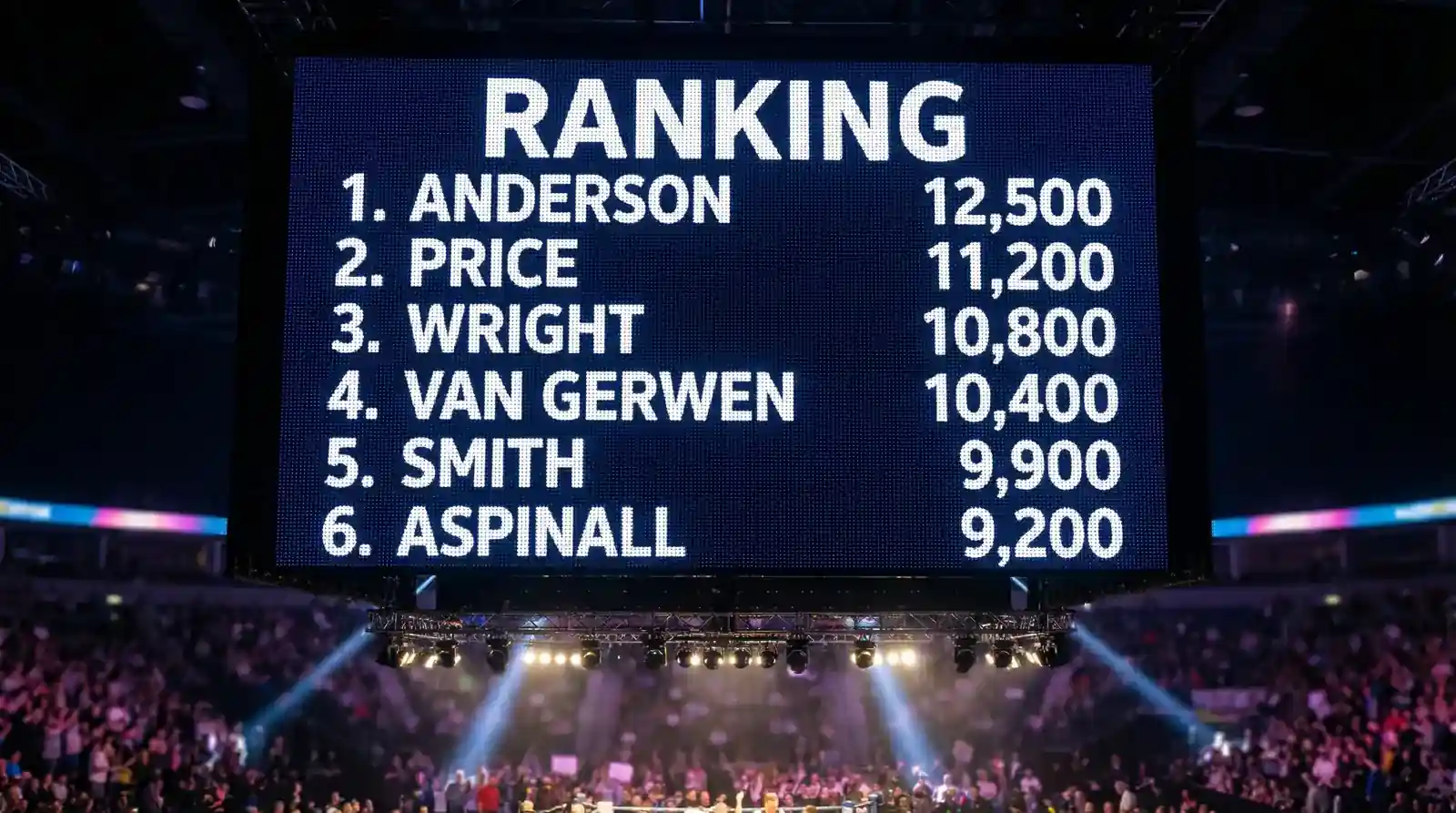
The prize money escalation has a direct effect on the Order of Merit and tournament seedings. When the World Championship winner earns one million pounds — up from 500,000 just two years prior — a single result can reshape the rankings dramatically. A player who reaches the World Championship final could jump ten ranking places on prize money alone, altering their seedings and draw positions for the following year’s events. For bettors who track rankings and seedings as part of their analysis, the increased financial weight of top events makes the Order of Merit more volatile and less reflective of consistent circuit-wide performance.
Viewership Records and the Sky Sports Megadeal
Sky Sports signed a new contract with the PDC worth 25 million pounds per year, more than double the previous deal of 12 million annually. That investment reflects audience numbers that have made darts the second most-watched sport on Sky Sports after football, surpassing the F1 British Grand Prix’s peak viewership of 2.19 million.
The 2026 World Championship final between Littler and Van Veen drew a peak audience of 2.5 million on Sky, with an average of 1.4 million. The 2024 final — Humphries against Littler — had set the record at 3.7 million peak viewers. Even pre-semi-final matches averaged 471,000 viewers in the 2024/25 season, up 39% year on year. The PDC’s European Tour final in Dortmund attracted 33,000 live spectators, making it the second-largest PDC event by attendance after the World Championship.
These viewership numbers translate directly into betting volume. More viewers means more casual bettors entering the market, which means more recreational money flowing into darts odds. The PDC’s move to the Great Hall at Alexandra Palace, increasing capacity to roughly 5,000 from 3,200, will amplify the spectacle further and drive even more media coverage.
For bettors, the viewership boom is a double-edged sword. More casual money in the market creates pricing inefficiencies that sharp bettors can exploit — recreational bettors tend to overback favourites, overreact to televised performances, and chase popular players regardless of price. But the same growth attracts more sophisticated operators, sharper traders, and faster-moving lines, which narrows the window in which those inefficiencies exist.
More Money In, Sharper Lines Out: How Growth Narrows Value
Here’s the paradox of darts’ growth: the bigger the market gets, the harder it becomes to find edge within it. Entain reported a 37% increase in darts betting volume since 2018, with World Championship bets nearly doubling at 92% and total stakes up 59%. That volume attracts attention from sportsbooks, who respond by investing more in their darts pricing models, hiring specialist traders, and tightening margins.
Five years ago, I could find consistent 5-8% edges in PDC match winner markets because the pricing was relatively lazy — darts was a secondary sport for most operators. Today, the edges on televised PDC matches have compressed to 2-4% on average, which is still exploitable but demands more precision and larger sample sizes to generate meaningful returns. The easy money has been competed away, and what remains requires genuine analytical work to capture.
The sharpening hasn’t been uniform, though. Televised match winner markets are the most efficiently priced because they attract the most volume and attention. But peripheral markets — 180s props, handicaps, checkout specials, in-play, and outright futures — remain softer because the volume on each individual market is lower, and the sportsbook’s pricing investment is proportionally smaller. The growth of darts has pushed smart bettors away from the headline markets and toward these edges, a migration that I’ve followed myself over the past three seasons.
Floor events remain the least efficiently priced segment of the darts betting market. The absence of broadcast attention means fewer casual bettors, less volume, and less sportsbook investment in accurate pricing. As the PDC calendar expands — more European Tour stops, more Players Championship events — the floor event betting calendar grows alongside it, creating more opportunities for bettors who do the research the market doesn’t reward with automatic efficiency.
The growth trajectory of professional darts shows no indication of plateauing. Matt Porter’s emphasis on broadcast as the primary method of spreading the game, combined with the generational appeal of players like Littler, suggests that viewership, prize money, and betting volume will continue rising for the foreseeable future. For darts bettors, the strategic implication is clear: the market will keep getting sharper, the easy edges will keep shrinking, and the bettors who survive will be the ones who adapt their methods to find value in places the growing market hasn’t yet reached.
How has increased darts viewership affected the sharpness of betting odds?
Higher viewership drives higher betting volume, which attracts more sportsbook investment in accurate pricing models and specialist traders. The result is tighter margins and smaller edges on televised match winner markets. However, peripheral markets — handicaps, 180s props, in-play, and outright futures — remain less efficiently priced because they attract proportionally less volume and attention.
Does higher prize money attract more betting volume to darts?
Yes. The doubling of the World Championship prize fund to five million pounds and the growth of prize money across the PDC circuit has elevated darts’ profile, attracting both more viewers and more bettors. Entain reported a 37% increase in darts betting volume since 2018, with stakes on the World Championship nearly doubling. Higher prize money also attracts more media coverage, which drives further betting interest in a reinforcing cycle.
Find the best options for darts betting.
Read our detailed review of PDC Order of Merit and Darts Betting: How Rankings Inform Your Bets.
Prepared by the Darts Betting editorial staff.